06 Days
Jaipur Tour Packages — The Pink City of Rajasthan
Looking for Jaipur tour packages that go beyond the surface?
You’re in the right place.
History of Jaipur — The Pink City
Jaipur, often called the “Pink City,” was founded in 1727 by Maharaja Sawai Jai Singh II, the ruler of Amer. He envisioned Jaipur as a planned city, designed to accommodate a growing population and serve as the new capital of his kingdom. Amer, the previous capital, had limitations in terms of water supply and space, prompting Jai Singh to build a new city just 11 kilometres away.
The city was designed by Vidyadhar Bhattacharya, a Brahmin scholar and architect, who followed the principles of Vastu Shastra and Shilpa Shastra. Jaipur was laid out in a grid pattern with wide streets, large squares, and well-defined sectors — one of the earliest examples of urban planning in India. Maharaja Jai Singh II was also a renowned astronomer who built several observatories, including the Jantar Mantar, now a UNESCO World Heritage Site.
Jaipur’s signature pink colour has an interesting origin. In 1876, the city was painted pink to welcome the visit of Prince Albert, consort of Queen Victoria. Pink is traditionally associated with hospitality in Rajputana culture, and the city has proudly maintained this look ever since.
Top Attractions in Jaipur
Jaipur rewards slow travellers. One day gives you a taste — two or three days lets you actually feel the city. Having taken thousands of visitors through Jaipur over the years, these are the places we always make sure people see.
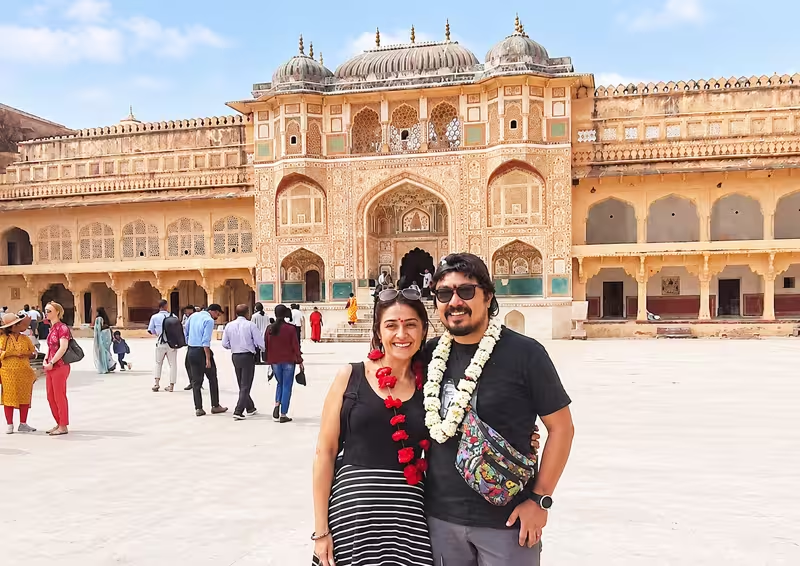
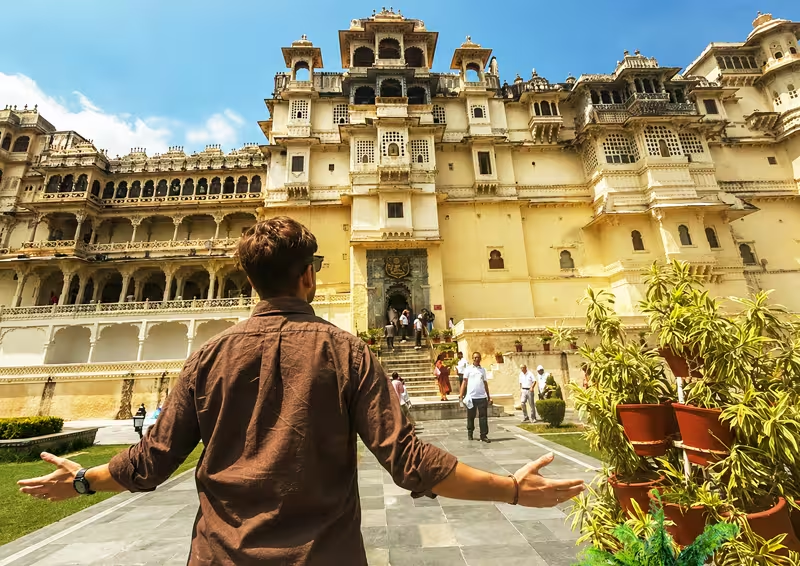
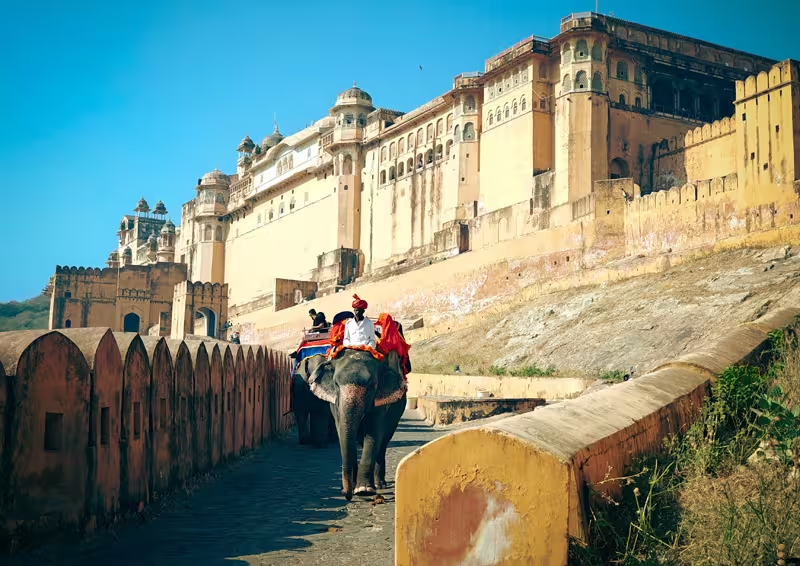
The Amber Fort is the undisputed highlight — a massive hilltop fortress with mirror-inlaid halls, sweeping views, and centuries of Rajput history packed into its walls. Go early before the tour buses arrive. The City Palace in the heart of the old city is still partially home to the royal family of Jaipur and houses a remarkable museum of royal artefacts, textiles, and weapons.
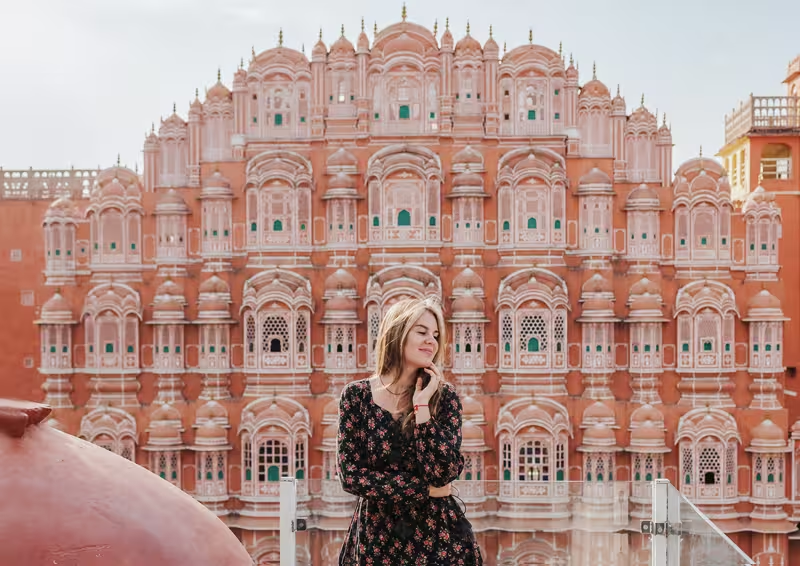
The Hawa Mahal (Palace of Winds) is Jaipur’s most photographed landmark — a five-storey honeycombed facade built so royal women could observe street life without being seen. It’s best photographed from the outside in the morning light. Jantar Mantar, just a short walk away, is an astronomical observatory built in 1734 with instruments so accurate they’re still used today — genuinely fascinating even if you’re not into astronomy.
For shopping, Johari Bazaar and Bapu Bazaar are where you’ll find Jaipur’s famous gemstones, block-printed textiles, and blue pottery. Our guides know exactly which shops are trustworthy, which saves you considerable time and money.
All of these are covered across our Jaipur tour packages, with a local expert guiding you through every site.
Best Time to Visit Jaipur
October to March is the sweet spot. Jaipur sits in the Thar Desert region, so winters are pleasantly cool and dry — perfect for fort hopping and walking the old city bazaars. Temperatures range from around 8°C at night to 22°C during the day in December and January, so pack a light jacket for evenings.
Summer (April to June) is genuinely brutal — temperatures regularly cross 44°C. If you must visit in summer, plan all outdoor sightseeing before 10am and after 5pm. The monsoon (July to September) brings relief from the heat and turns the countryside green, but some outdoor monuments can be slippery and uncomfortable.
The Jaipur Literature Festival in January and the Teej Festival in August are both worth planning around if culture and festivals interest you.
Our Jaipur tour packages run year-round and are designed around the season you’re visiting, so you always get the best experience regardless of when you travel.
How to Reach Jaipur
Jaipur is well connected and easy to reach from Delhi, Agra, and other major cities.
From Delhi, the fastest option is the Shatabdi Express which takes about 4.5 hours and runs daily from New Delhi railway station — comfortable, punctual, and affordable. By road, Jaipur is approximately 280 km from Delhi via the Delhi-Jaipur Expressway, taking around 4 to 5 hours by car depending on traffic. Jaipur also has an international airport (Jaipur International Airport) with direct flights from Delhi, Mumbai, and several international destinations.
From Agra, Jaipur is about 240 km and roughly 4 hours by road — a route that passes through some beautiful Rajasthan countryside. This is one of the most popular legs of the Golden Triangle tour and a journey we’ve done hundreds of times.
We arrange private car transfers to Jaipur from Delhi or Agra as part of all our tour packages, or as a standalone transfer if you just need a reliable ride with a professional driver.
Browse our Jaipur tour packages below — from day trips from Agra to full Rajasthan tour packages covering the entire region.