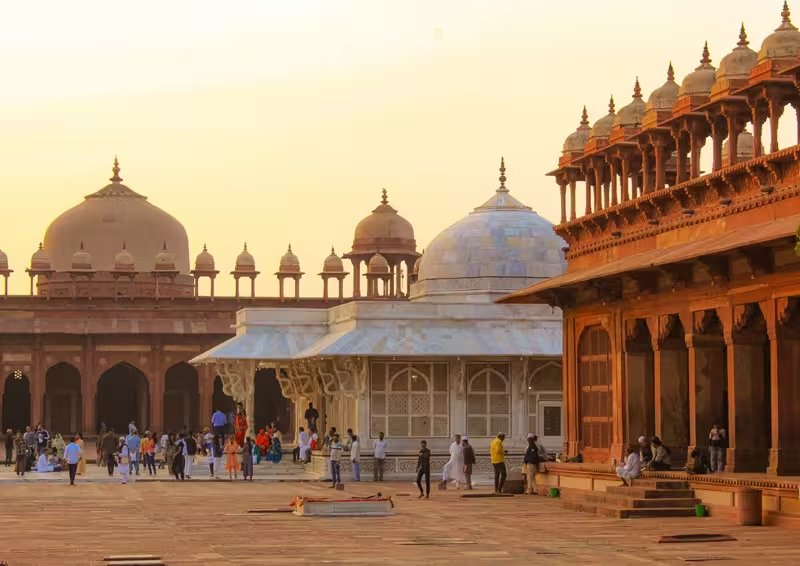
Akbar built Fatehpur Sikri in 1571 and left it within about fourteen years. The usual explanation is that the water supply failed, though historians also point to politics and military needs that pulled the court elsewhere. What he left behind is a red sandstone city that has stood nearly empty for four centuries, about 40 km from Agra. UNESCO listed it as a World Heritage Site in 1986.
Most visitors treat it as a quick add-on to the Taj Mahal. It deserves more than that. Below is the route we suggest to our guests, with the details worth knowing at each stop. Allow two to three hours.
Before you go
- Best time: October to March. From April to June the sandstone holds the heat and the courtyards feel like an oven.
- Timings and tickets: ASI monuments normally run from sunrise to sunset, but fees differ for Indian and foreign visitors and change from time to time. Check the ASI site before you travel.
- Guides: Use an ASI-approved guide, or arrange one through us. Unofficial guides at the gate can be pushy and often hurry you through.
- What to wear: Cover your shoulders and knees for the mosque and the tomb. Wear shoes that are easy to take off, since footwear is not allowed in either.
- Start early: Tour buses from Agra tend to arrive late morning. Getting there by 8:30 am makes a clear difference to the crowds and the light.
1. Diwan-i-Am and the royal courtyards
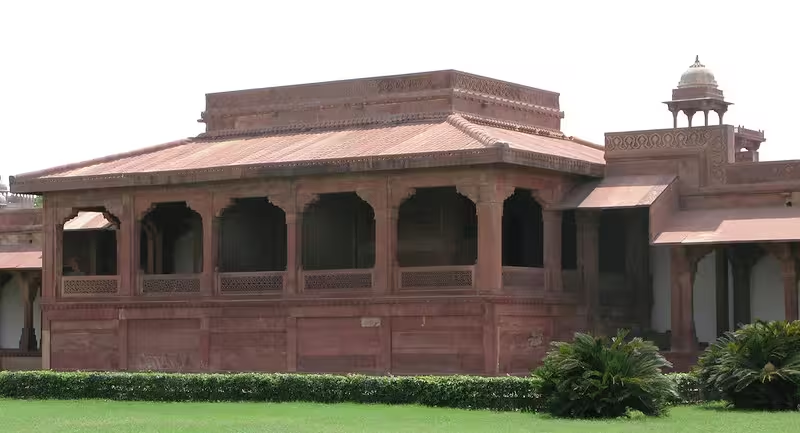
Most people walk straight past the Diwan-i-Am, the hall of public audience, on their way to the famous buildings. It is worth a pause. This is where Akbar heard petitions from ordinary subjects, and the scale of the open court gives you a sense of how the city worked day to day. Nearby are the Pachisi Court, where the emperor is said to have played a life-size board game, and the Ibadat Khana, where Akbar held debates among scholars of different faiths.
2. Diwan-i-Khas
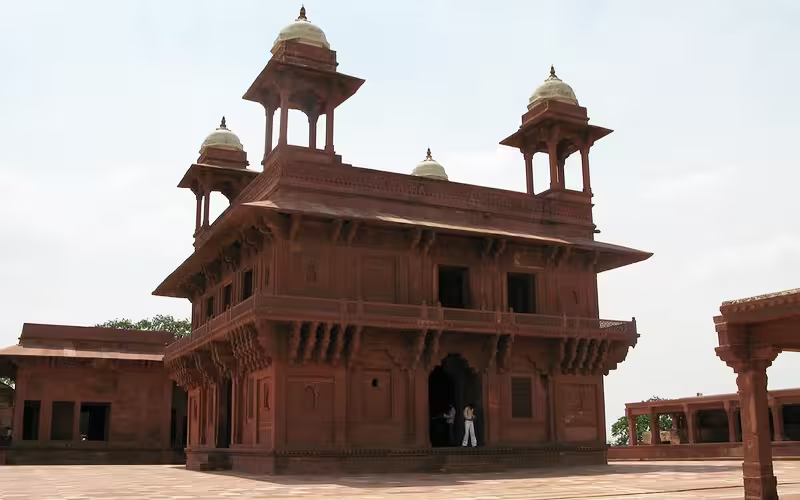
The building is often described as the hall of private audience. Its interior is remarkable: a single carved pillar rises from the centre and opens into a circular platform at the top, linked to the walls by narrow stone walkways. A popular reading is that Akbar sat at the centre while advisers stood at the corners, and that the carving blends Hindu, Islamic, Jain and Buddhist motifs, reflecting his interest in many faiths. Some historians question the traditional name and function, so treat the labels as the story most guides tell rather than settled fact.
3. Panch Mahal
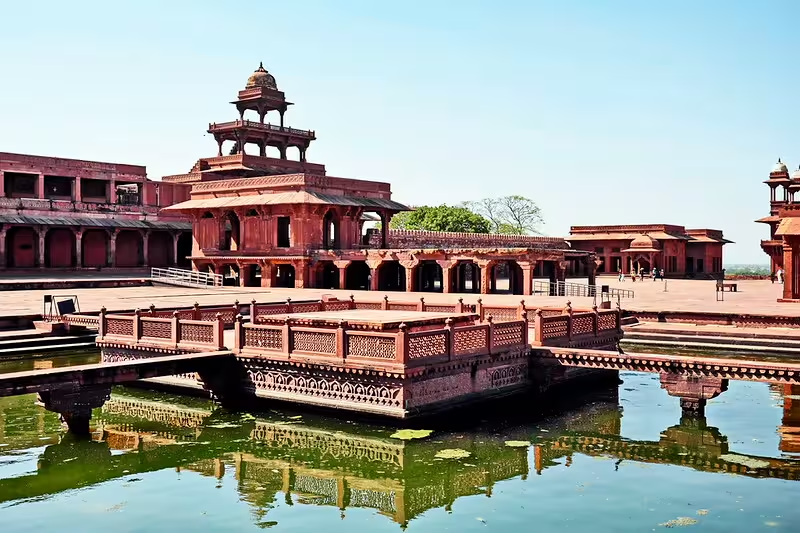
The five-storey Panch Mahal narrows as it climbs, each level smaller than the one below. It was probably a pleasure pavilion where the women of the court could catch the breeze, and the open columns do make it noticeably cooler inside. Look closely at the pillars: no two carved patterns are quite the same. Access to the upper floors has been restricted in the past to protect the structure, so you may only be able to admire it from the ground.
4. Jodha Bai’s Palace
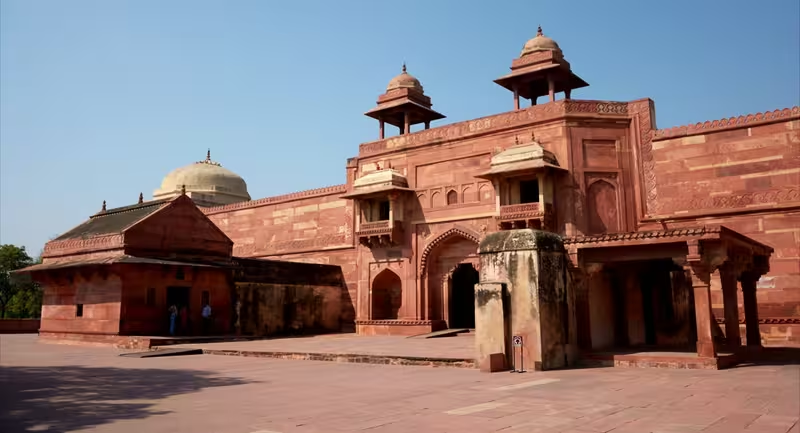
This is the largest residence in the complex and the one that shows Akbar’s blending of styles most clearly. Gujarati-style brackets, Rajput-influenced rooms and Mughal courtyards sit side by side. The name is a later tradition. Scholars believe the palace housed the senior women of the royal household.
5. Birbal’s Bhavan
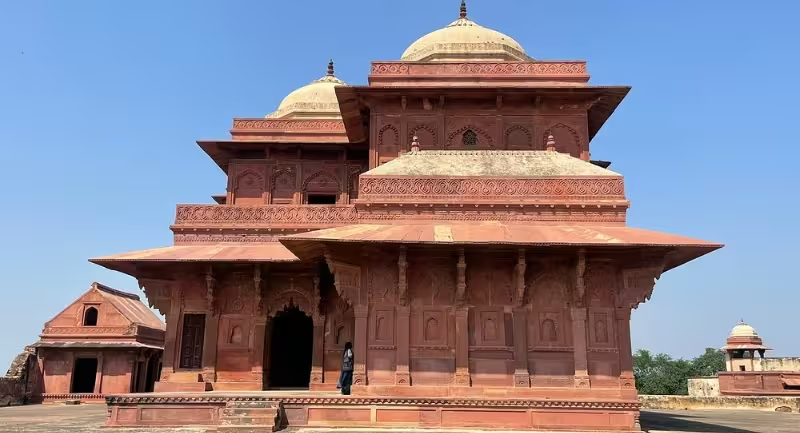
Locals call it Birbal’s palace, after Akbar’s witty and trusted courtier. Most historians now think it was built for Akbar’s two senior queens, Ruqaiya Begum and Salima Sultan Begum. Whoever lived here, the carved brackets, domes and green-tiled details reward a slow look.
6. Jama Masjid
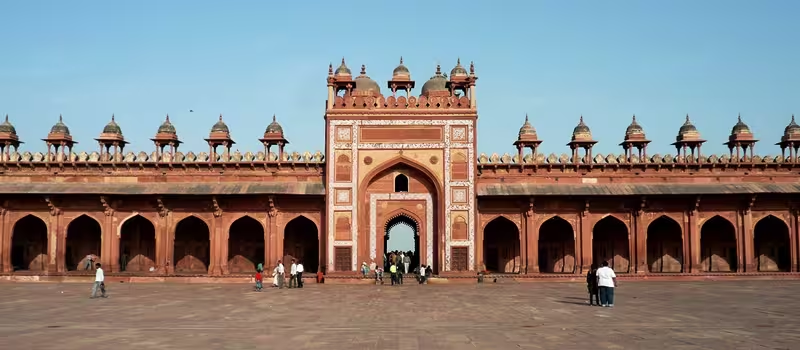
The Jama Masjid is one of the largest mosques in India and still holds daily prayers. Its prayer hall faces a wide courtyard of red sandstone, with white marble inlay picking out the arches. Remove your shoes at the entrance and expect the stone underfoot to be hot on summer afternoons. Cover up, and be respectful during prayer times.
7. Tomb of Sheikh Salim Chishti
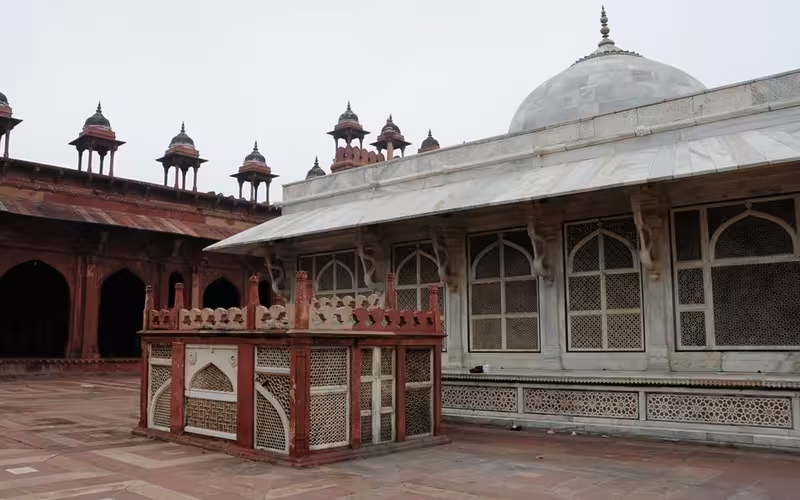
In the courtyard of the mosque stands the white marble tomb of the Sufi saint Sheikh Salim Chishti. Tradition holds that Akbar visited him when he had no surviving heir, and that the prince later known as Jahangir was born soon after. That story is why this city exists, and why visitors still come to ask for a blessing. The marble lattice screens (jalis) are among the finest in India. People tie threads on them as a wish. Please follow local custom and do not take photographs inside the inner chamber.
8. Buland Darwaza
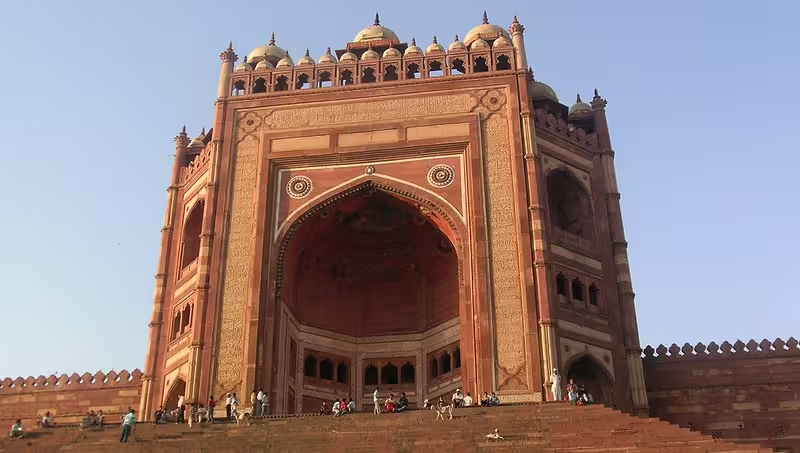
The Buland Darwaza is the south entrance to the mosque and the highest point of the visit, at around 54 metres. Akbar built it around 1601-02 to commemorate his conquest of Gujarat, and it is counted among the largest gateways in the world. Standing at the foot of its steps and looking up gives you a real sense of imperial ambition. Photos work best from the courtyard side in the morning, when the sun lights the face of the gate.
9. Hiran Minar
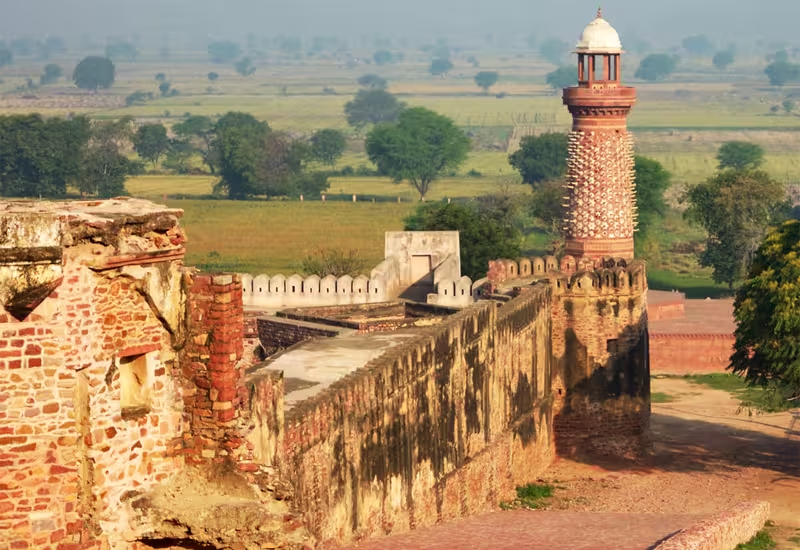
Hiran Minar sits a short drive outside the main complex. Tradition says it commemorates Akbar’s favourite elephant, Hiran, though some historians suggest it also served as a hunting tower or distance marker. The pillar is studded with stone projections that look like tusks. It is quieter than the rest of the site, which makes it a good place to end the visit.
Common mistakes we see
- Rushing it. An hour is not enough. Plan on two to three, and more if you like photography.
- Going at midday in summer. Start at opening time instead.
- Buying from touts at the entrance. Fix your guide and any souvenir budget before you go in.
- Skipping Diwan-i-Am. It explains how the city functioned and takes only a few minutes.
Planning your trip beyond Fatehpur Sikri
Fatehpur Sikri works best as part of a longer route. Here is how our guests usually build it:
- Short on time? Our Agra and Fatehpur Sikri day trip from Delhi covers both in one day with a private car and driver.
- Seeing the Taj first? Read our guide to visiting the Taj Mahal at sunrise before you book.
- Want the full circuit? The Golden Triangle tour: Delhi, Agra, Jaipur includes Fatehpur Sikri on the Agra-Jaipur drive.
- Need a driver only? See our Delhi to Agra private taxi options with fixed rates.
- Travelling with family or a group? Our customised North India itineraries can be adjusted to your pace.
- Not sure when to go? Check our best time to visit Agra guide.
Final thoughts
Fatehpur Sikri is easy to underrate because it sits in the shadow of the Taj Mahal. It rewards patience. Go early, take a good guide, and spend time in the quieter courts. You will leave with a clearer picture of how Akbar thought, and why he built a capital he would not stay in.
Have a question about visiting? Contact our team and we will help you plan it.
By Harshit
Harshit helps travellers plan and experience Agra, the Taj Mahal, and other destinations across India, with a practical understanding of local travel and sightseeing.
Sources: Archaeological Survey of India (ASI), UNESCO