
10 Best Places to Visit in Agra: A Complete Guide to Its Famous Landmarks
Agra is best known for the Taj Mahal, but there is much more to see in this historic city. Located in Uttar Pradesh, on the banks of the Yamuna River, Agra was an important centre of the Mughal Empire. Its forts, tombs, gardens and old markets offer a closer look at the architecture and history that shaped the city.
Whether you are visiting Agra on a same-day trip from Delhi or planning to spend a night in the city, there are several places worth adding to your itinerary. Here are 10 of the best places to visit in Agra, including famous monuments, quieter historical sites and local markets.
1. Taj Mahal
The Taj Mahal is the landmark most visitors associate with Agra. Emperor Shah Jahan commissioned this white marble mausoleum in memory of his wife, Mumtaz Mahal. Construction began in 1632, and the complex is now recognised as a UNESCO World Heritage Site.
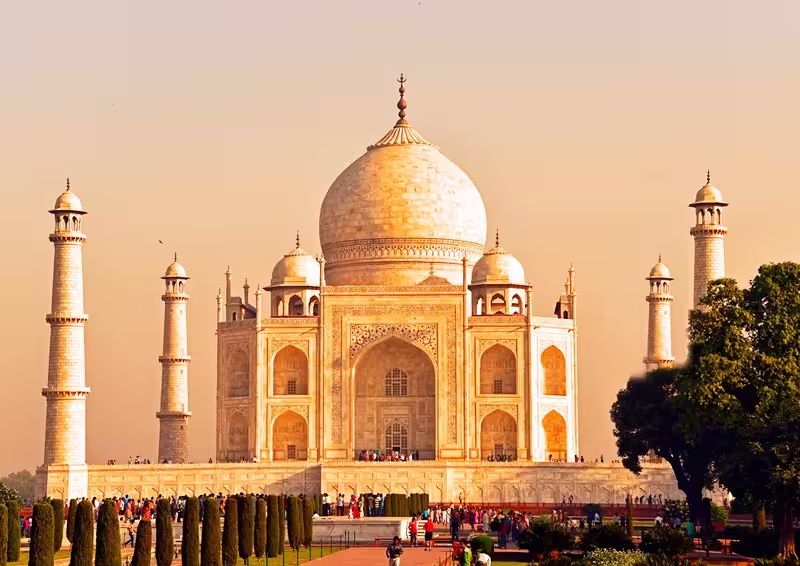
The building is known for its balanced design, large central dome, carved marble screens and detailed pietra dura inlay work. The changing daylight gives the marble different shades, making the monument particularly appealing to photographers.
What to know before visiting: Arrive early to explore the grounds before the busiest part of the day. The Taj Mahal is closed to visitors on Fridays, so check the official opening information before planning your trip. Sunrise visits are popular, especially during the cooler months.
2. Agra Fort
Agra Fort is another UNESCO World Heritage Site and one of the city’s most important historical landmarks. Emperor Akbar began rebuilding the fort in red sandstone in 1565, and later Mughal rulers added palaces, audience halls and other structures.
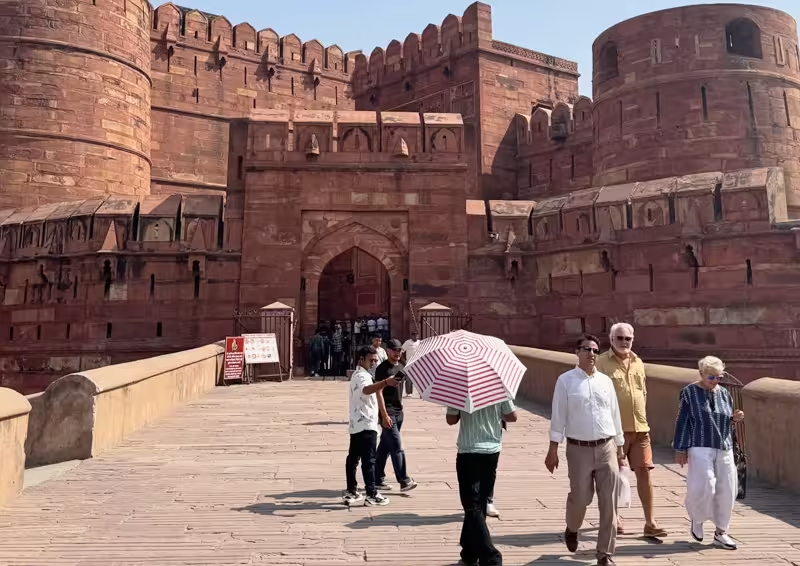
Inside, you can explore buildings such as Jahangir Mahal, the Diwan-i-Am and the Diwan-i-Khas. The fort also has views towards the Taj Mahal from selected areas. Its courtyards and royal chambers help explain how the Mughal court operated and how the complex changed under successive emperors.
What to know before visiting: Allow around two hours to explore the main sections without rushing. Agra Fort fits well into a day that begins at the Taj Mahal.
3. Fatehpur Sikri
Fatehpur Sikri lies approximately 35–40 km from central Agra, depending on the starting point. Emperor Akbar developed the city in the 16th century, and it served as his imperial capital for a relatively short period before the court moved elsewhere.
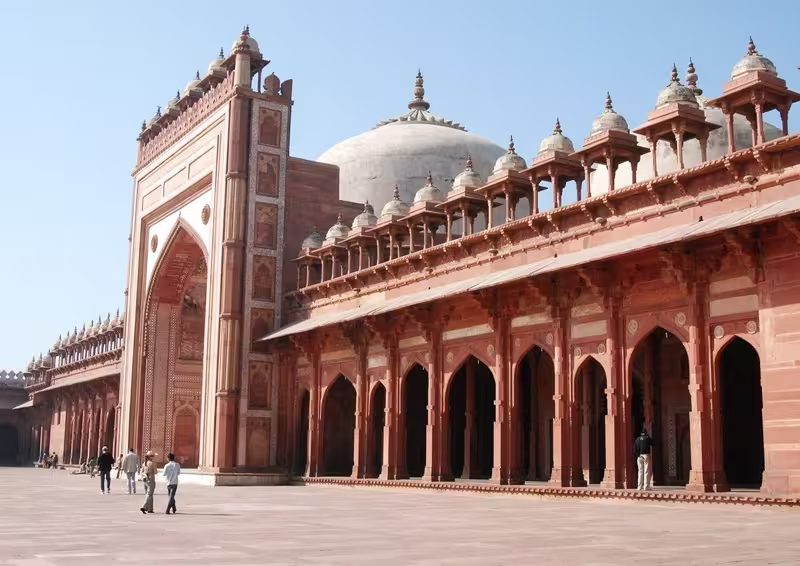
The complex includes Buland Darwaza, Panch Mahal, the Diwan-i-Khas and the Tomb of Salim Chishti. Its architecture combines different design traditions and provides insight into Akbar’s court and administration.
Fatehpur Sikri is often included in longer Agra itineraries, but visiting it alongside the Taj Mahal and Agra Fort can make a same-day trip quite demanding.
What to know before visiting: Set aside two to three hours for the main complex, plus travel time from Agra. If you have only one day, decide whether Fatehpur Sikri is a priority before finalising your schedule.
4. Itimad-ud-Daulah’s Tomb (Baby Taj)
Often called the Baby Taj, Itimad-ud-Daulah’s Tomb is a smaller Mughal mausoleum known for its white marble surfaces, delicate stone screens and detailed inlay work. Nur Jahan commissioned it in memory of her father, Mirza Ghiyas Beg, and the monument was completed in the 1620s.
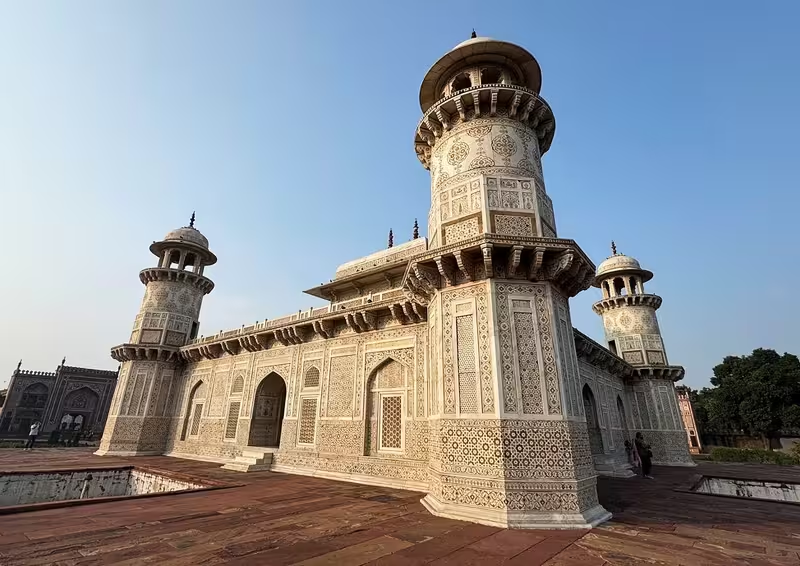
The tomb is sometimes discussed as an architectural predecessor to the Taj Mahal because of its extensive use of white marble and decorative inlay. It has a quieter atmosphere than Agra’s most famous monument, making it a good stop for visitors interested in Mughal art and architecture.
What to know before visiting: Allow around 45 minutes to an hour. Its location on the eastern side of the Yamuna makes it possible to combine the visit with other riverside attractions.
5. Mehtab Bagh
Mehtab Bagh is a garden complex on the northern bank of the Yamuna River, opposite the Taj Mahal. Its position across the river offers a different perspective of the mausoleum, away from the main entrance and crowds.
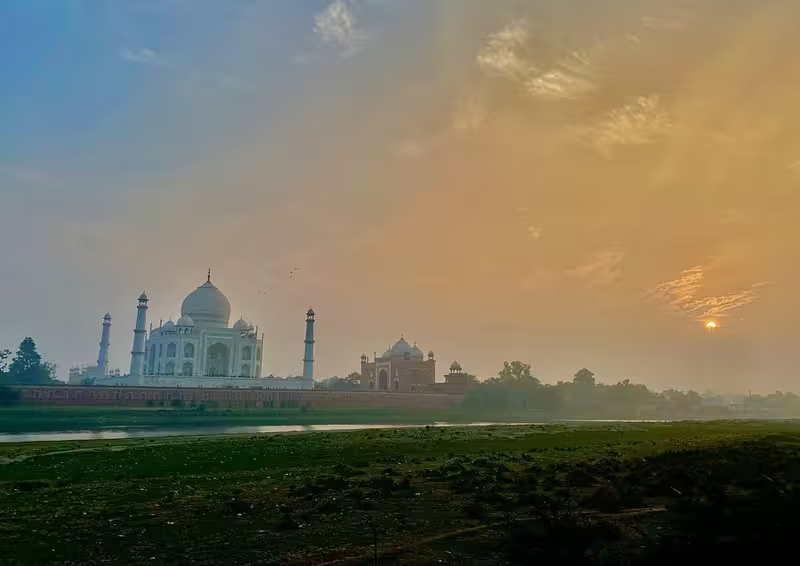
The garden is associated with the Mughal tradition of formal garden design. Visitors come here for open views of the Taj Mahal, especially in the late afternoon when the light can be attractive for photography.
What to know before visiting: Check the current opening hours and sunset timing before going. Mehtab Bagh is a useful addition if you have extra time in Agra or want to photograph the Taj Mahal from across the river.
6. Akbar’s Tomb, Sikandra
Akbar’s Tomb is located in Sikandra, on the outskirts of Agra. The tomb was begun during Akbar’s lifetime and completed under his son, Jahangir, in the early 17th century.
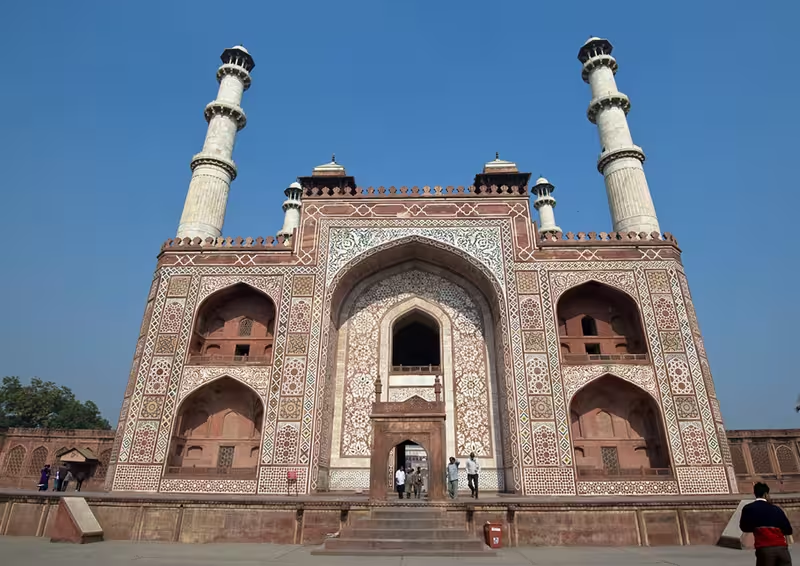
The large complex sits within landscaped gardens and features red sandstone, marble detailing and architectural elements drawn from several traditions. Its design differs from the Taj Mahal and provides another perspective on Mughal funerary architecture.
The surrounding grounds also offer a quieter setting than the city’s busiest monuments.
What to know before visiting: Allow approximately one hour to explore the tomb and gardens. Since Sikandra is outside the main tourist centre, consider the extra travel time when planning your route.
7. Jama Masjid, Agra
Located near Agra Fort and the old railway station area, Jama Masjid is an important mosque built during the reign of Shah Jahan. It was completed in 1648 and is associated with his daughter, Jahanara Begum.
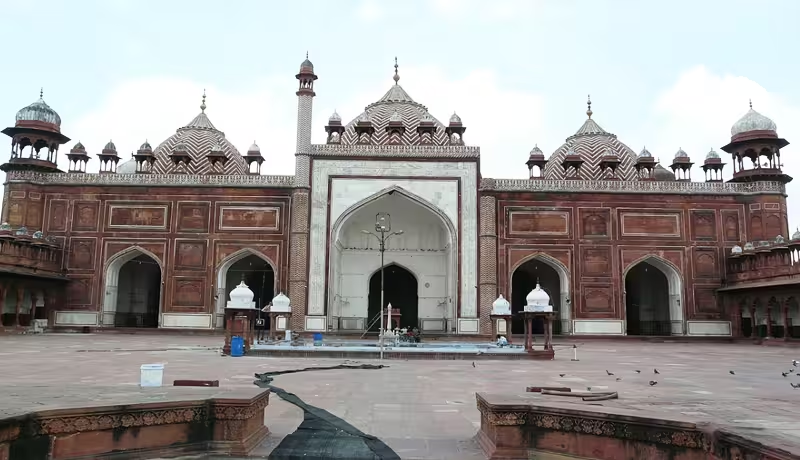
The mosque features a large courtyard, red sandstone elements, white marble details and decorative inscriptions. It remains a place of worship, so visitors should be respectful of prayer times, dress appropriately and follow any restrictions on entry or photography.
What to know before visiting: Its location makes it convenient to see the mosque while exploring the historic centre. Check local access arrangements, as entry may be restricted during prayers.
8. Mankameshwar Temple
Mankameshwar Temple is a well-known Shiva temple in the old part of Agra, close to Agra Fort. It attracts devotees throughout the year, particularly during religious occasions associated with Lord Shiva.
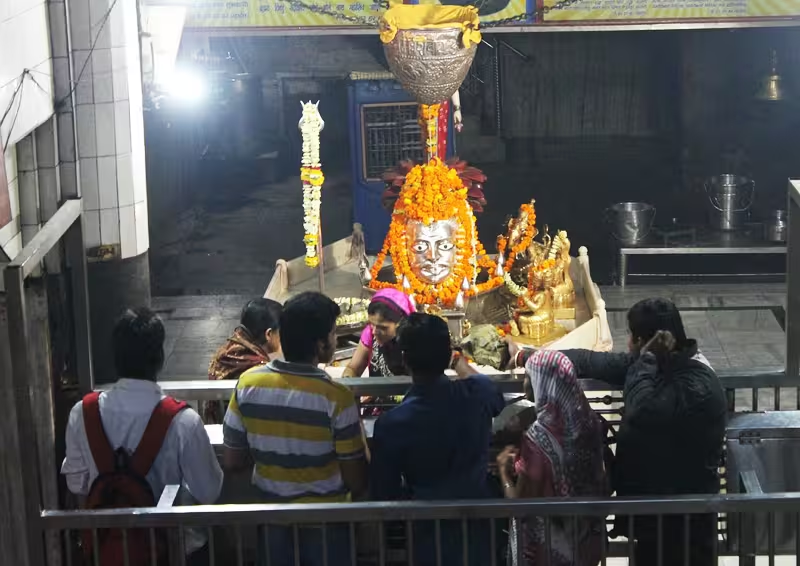
The temple offers a different experience from the city’s Mughal monuments. It is also an opportunity to see a part of Agra’s living religious life rather than focusing only on historical buildings.
What to know before visiting: Dress modestly, follow the temple’s rules and check whether footwear must be left outside. The surrounding lanes can be busy, so allow additional time to reach the entrance.
9. Chini Ka Rauza
Chini Ka Rauza is a Mughal-era tomb on the eastern side of the Yamuna, not far from Itimad-ud-Daulah’s Tomb. It is associated with Allama Afzal Khan Mullah, a Persian scholar and official who served under Shah Jahan.
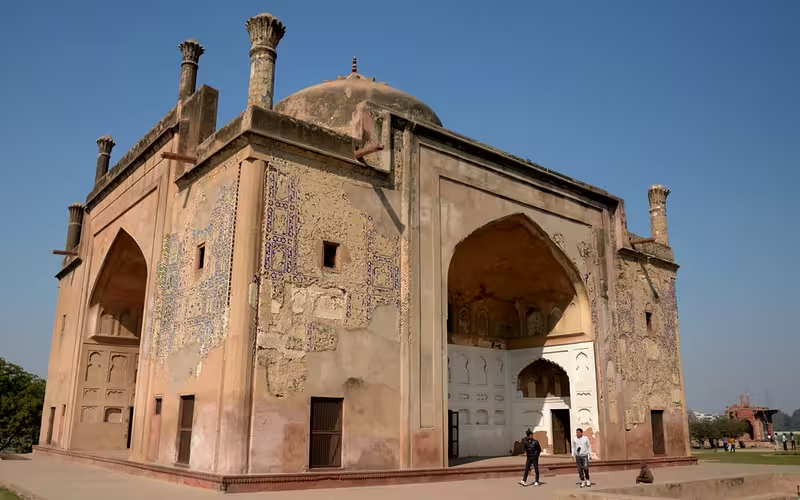
The monument is known for its Persian-influenced design and the glazed tile decoration that gives it its name. Although parts of the original decoration have deteriorated over time, the tomb remains an interesting stop for travellers who want to explore beyond Agra’s best-known attractions.
What to know before visiting: You can combine it with Itimad-ud-Daulah’s Tomb to explore this part of the city. Check current access conditions before making a special trip.
10. Shopping at Sadar Bazaar
For a change of pace after visiting monuments, spend some time exploring Sadar Bazaar. The market is known for its shops selling leather goods, footwear, clothing, handicrafts and souvenirs. It is also a place to try local snacks and look for Agra’s famous petha, a sweet traditionally made from ash gourd.
Shopping here gives you a glimpse of the city’s everyday commercial life. Prices, quality and product origins vary between shops, so compare options before buying. If you are purchasing marble handicrafts, ask about the material and how the item was made.
What to know before visiting: Visit when the market is open and allow time for traffic and parking. Keep an eye on your belongings in crowded areas, and agree on prices before making a purchase where bargaining is customary.
How to Plan Your Agra Sightseeing Trip
If you are travelling from Delhi, the time available will determine how many places you can comfortably visit.
- For a same-day Agra trip from Delhi: Prioritise the Taj Mahal and Agra Fort, with a visit to Itimad-ud-Daulah’s Tomb or Mehtab Bagh if time allows. You can explore our same-day Agra tour packages from Delhi to plan your visit.
- For a full day with an early start: You may be able to visit three or four attractions, depending on transport, queues and the time spent at each site.
- For a two-day visit from Delhi: Explore Agra’s main monuments at a relaxed pace and include Fatehpur Sikri if time allows. See our Delhi to Agra 2-Day Tour with Fatehpur Sikri for a planned two-day sightseeing experience.
Travel times and monument opening hours can vary. Check official ticketing information before departure, particularly if you are visiting during a public holiday or a busy travel period.
Final Thoughts
Agra offers much more than a photograph of the Taj Mahal. Agra Fort explains the city’s role in the Mughal Empire, Itimad-ud-Daulah’s Tomb reveals the detail of Mughal craftsmanship, and Mehtab Bagh provides a different view of the Taj Mahal. Places such as Chini Ka Rauza and Mankameshwar Temple add further variety to a visit.
If you are planning a same-day trip from Delhi, choose your stops carefully rather than trying to cover every attraction. With an early start and a realistic itinerary, you can experience Agra’s best-known landmarks and still have time to appreciate the city’s history and local character.
By Harshit
Harshit helps travellers plan and experience Agra, the Taj Mahal, and other destinations across India, with a practical understanding of local travel and sightseeing.